
When summer slows down and the breeze smells like freedom and nostalgia
A strangely cool and sunny day here in Virginia Beach. A rare break in a scorching summer. Maggie is completely absorbed in the Montreal tennis tournament, watching every rally as if it were a Wimbledon final. I, on the other hand, am bored. Too much peace and quiet to stay indoors.
So, taking advantage of this gentle weather, I decided to hop on my Vespa for a spontaneous ride through the countryside of Virginia Beach, heading toward Pungo Ferry Road. A road I love: open fields, the scent of earth, and that sense of freedom that only two wheels can give.
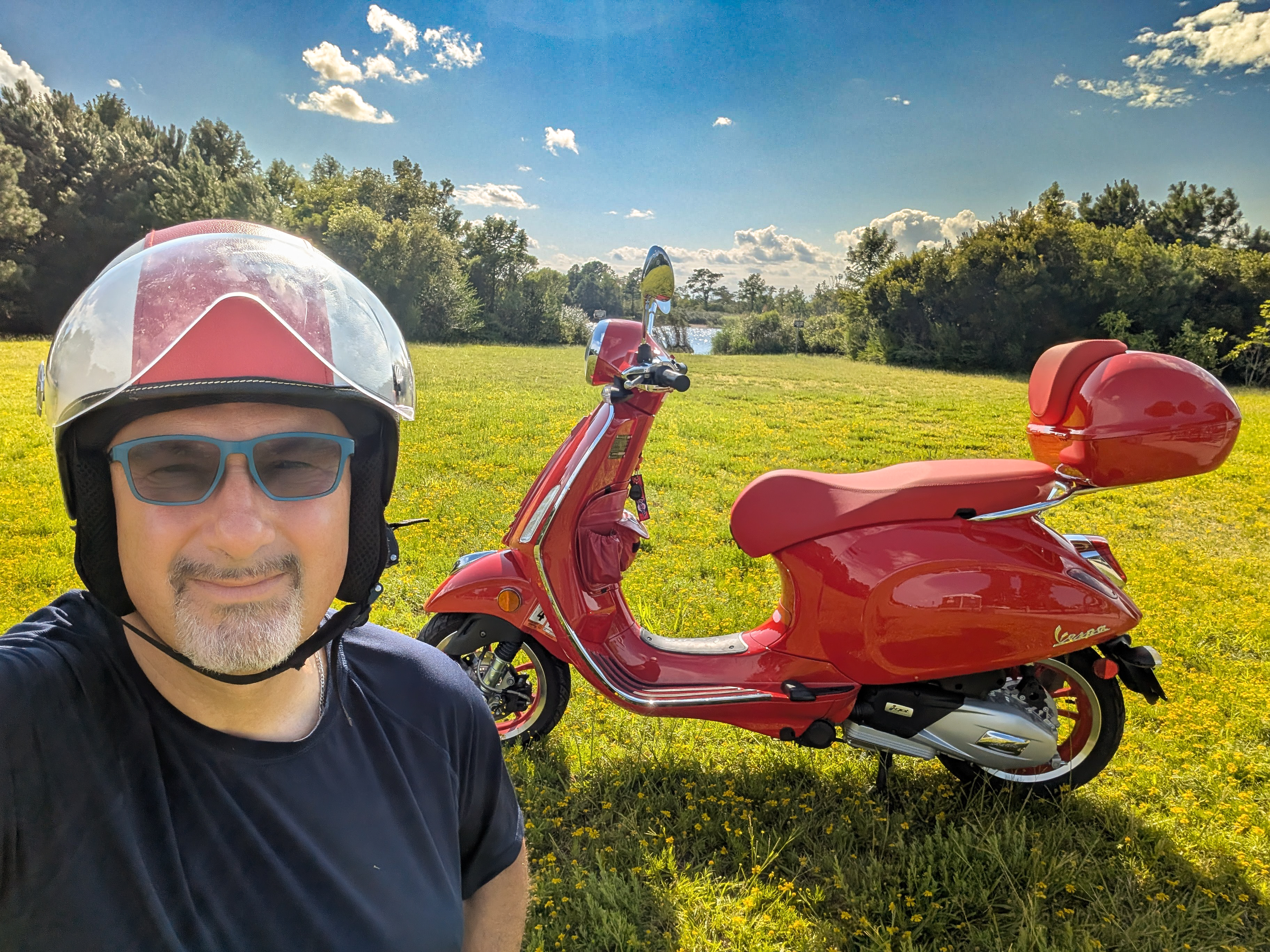
Every time I sit on that saddle, I travel back in time. My life as a motorcyclist began exactly like this, on a green 50cc Vespa with four gears. One summer, I worked at a legendary body shop: Ferrari. That’s where I decided to give my scooter a personal touch, painting it by hand with a fade from gold to red. A homemade masterpiece I still remember fondly.
Then came two PX 125s in Italy—silent witnesses of a thousand adventures. And once I moved to the U.S., I bought a PX 150 on eBay, shipped from Colorado. A disaster. A textbook lemon. I spent more time fixing it than riding it. Eventually, I gave up… and made the best decision ever: I bought a brand-new Vespa Primavera 150 Red.

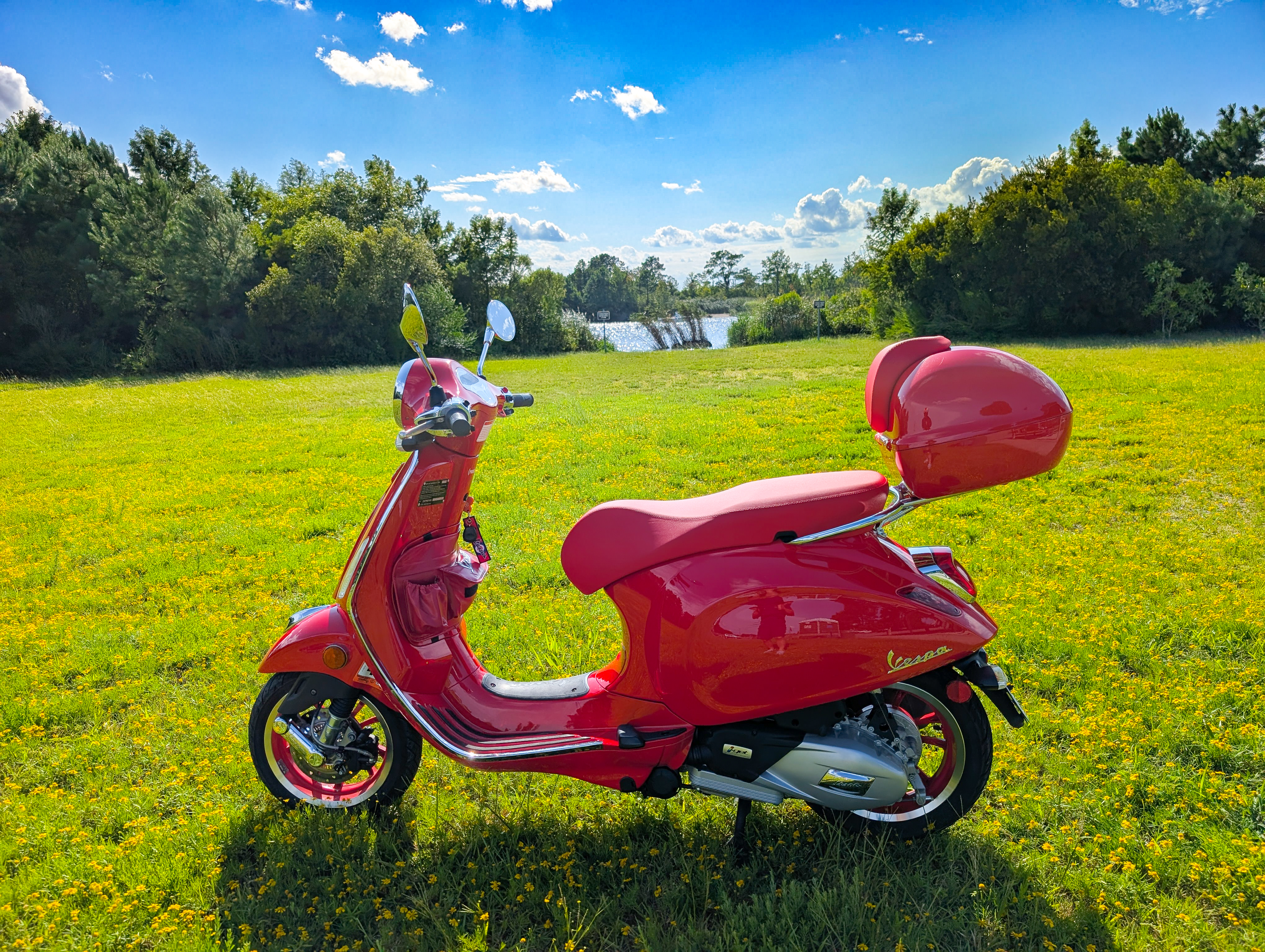
She’s beautiful. Elegant, zippy, carefree. Every time I ride it, people stop me, compliment me, ask about the year, the model, the color. More than when I’m on my Harley—true story!
And maybe that’s no surprise. Because the Vespa isn’t just a scooter: it’s an icon.
Born in the aftermath of WWII, when Italy needed to start over, the Vespa was the brainchild of Piaggio—a company that had, until then, made naval furniture and airplanes. In the 1940s, aeronautical engineer Corradino d’Ascanio—who ironically didn’t like motorcycles—designed something new, simple, and accessible. It was originally going to be called Paperino (Donald Duck), but Enrico Piaggio, hearing the engine’s buzz, said it sounded like a wasp: Vespa. And the name stuck.
With 98cc, three gears, 3.2 horsepower, and a top speed of 60 km/h, the first Vespa immediately captured the hearts of Italians. Sales boomed. It was expensive—68,000 lire, nearly a year’s salary—but thanks to installment payments, it became the symbol of a generation. Sidecars were born, along with the Ape and even a military version for French paratroopers.

In 1953, the Vespa got its international breakthrough in Roman Holiday: Audrey Hepburn and Gregory Peck rode through the streets of Rome, gifting the world an image of a lighthearted, romantic, dreamy Italy. From there, the Vespa never left the spotlight: from Quadrophenia to Hollywood, to Cinecittà and beyond.
Today’s ride was short but refreshing. A dive into memories, light curves, and free smiles. And as the sun sets behind the fields of Pungo, I realize you don’t need a thousand miles to feel like you’re on a journey. Sometimes all you need is a Vespa, a bit of road, and the right breeze.


Leave a Reply